The SMART FIRES Research Seed Award Program provides funding to support innovative research projects that align with the goals of the SMART FIRES NSF EPSCoR initiative, which focuses on advancing technologies and understanding around prescribed fire and its impacts on Montana communities. Open to faculty at Montana State University and the University of Montana, the program offers awards of up to $25,000 to fund activities such as equipment purchases, personnel costs, field data collection, and collaborative research. The intent is to foster novel research that enhances productivity, leads to external funding opportunities, and expands research experiences for students. Priority is given to proposals likely to result in publications, follow-on grants, and impactful education or workforce development outcomes, with an emphasis on broadening participation in fire science and related fields.
2025 Seed Awards
Statewide Awards
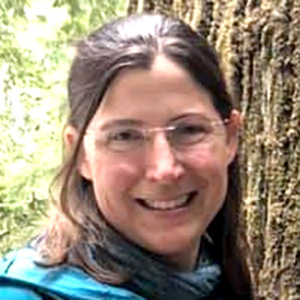
Shonna Dillon
This award will be used to plan a summer lab which integrates Crow cultural stories and information about our Little Big Horn River with LBHC Science curriculum. There are many intriguing Crow stories that speak on this River area from ceremonies to spirit stories, and we are interested in exploring this class with students and our Crow Elders and Story Tellers.
I am originally from the Crow Indian Reservation where I was born and raised. I am a member of the Crow Tribe, and I am also an Ogallala Sioux descendant and was raised in Wyola, MT. I graduated from Lodge Grass High School in 1987 and actually raised a family before deciding to go back to college. I obtained my 4-year degree at Rocky Mountain College in Billings. Being a non-traditional student with 6 kids when I returned to the college scene inevitably brought along with its challenges. But I was determined to complete my studies and earn my bachelor's degree and succeeded. Since then, I have taught, planned, demonstrated, administered in various jobs in and around my home, the Crow Tribe, for the past 15 years; from teaching at L.B.H.C to Crow Tribal Headstart to various TRiO Programs for our local schools. I am now back at teaching science and math at Little Big Horn College from which I graduated in 2002 before going to Rocky Mountain College in Biology. I love my community, I love my students and their families, and I love teaching.

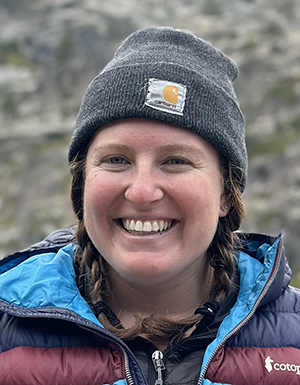
Bikash Mahato
The award will be used to train undergraduate students in smoke dispersion modeling and to develop research infrastructure.
Bikash Mahato is a Visiting Assistant Professor in the Department of Mechanical Engineering at Montana Technological University in Butte. He earned his PhD from the Indian Institute of Technology (IIT) Bhubaneswar, India. Before joining Montana Tech, Bikash worked as a research associate at IIT Bhubaneswar and IIT Delhi, and later served as a postdoctoral researcher at Florida State University. His research focuses on the fundamental study of fluid mechanics, with expertise in computational fluid dynamics. In the SMART FIRES project, Bikash will explore the effects of surface topology, wind velocity, and wind direction on smoke dispersion from prescribed fires.
Additionally, he is investigating particle dynamics in cold spray additive manufacturing using computational fluid dynamics models.

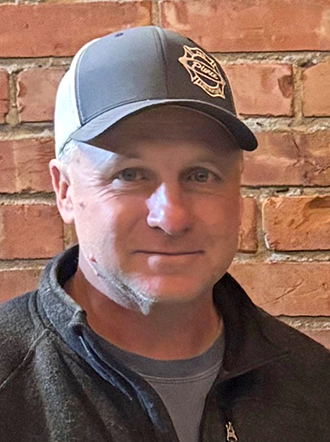
Taig O’Donnell
The City College at MSU Billings will be using the grant award to develop a one credit, field-based prescribed fire class focused on fire effects, field analysis and best implementation practices.
I am from Billings and was raised on the family ranch east of town. I graduated from Billings Senior High and then from Montana State University. I am following in the family fire tradition behind my brother, father and grandfather. I have been in the fire service for 32 years and am currently a captain at Billings Fire. I also work for the BLM in fire and fuels management and instruct at the City College at MSU Billings in the Fire Science Program. I have worked for the US Forest Service as a smokejumper, hot-shot, engine captain, a division on a type 2 incident management team and detailed as an assistant fire management officer. I have been teaching fire courses for over 25 years and have a significant fire suppression and prescribed fire background.
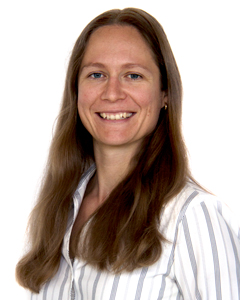
Alysia Cox
The SMART FIRES Seed Award will be used to support MS in Geoscience: Geochemistry student Ariana Rivera-Anazco as she makes her MS work on soil organic acid concentrations before and after prescribed burns in the Lubrecht Experimental Forest into a peer reviewed publication.
Dr. Alysia Cox is Professor of Environmental Chemistry at Montana Tech. She grew up in Michigan, USA and moved to Arizona State University (ASU) on a National Merit Scholarship where she received her B.S. summa cum laude in the Geological Sciences with minors in Biology and German from the Barrett Honors College. She earned her PhD in Chemical Oceanography at the Massachusetts Institute of Technology and the Woods Hole Oceanographic Institution. After postdoctoral work at ASU and the Swiss Federal Institute of Technology (ETH Zurich), Dr. Cox started the Laboratory Exploring Geobiochemical Engineering and Natural Dynamics (LEGEND) at Montana Tech. Her research combines geochemistry with biochemistry to determine active mechanisms of chemical reactions with wide application to the environment. Her research on freshwater, hydrothermal, oceanic, and forest ecosystems takes her and her lab to local rivers and forests, Yellowstone, Iceland, and Ecuador among other places!
Jon Fitch
This award will be used to develop rigorous science and math curricula that actively involve Native American culture for examples and problems.
Jon Fitch’s was an electrical engineer, specializing in industrial control applications. As an exit mechanism, Jon decided to take up high school math and science education. The complications of involving Native American culture into these technologies has brought Jon to this investigation.
Tribal Awards
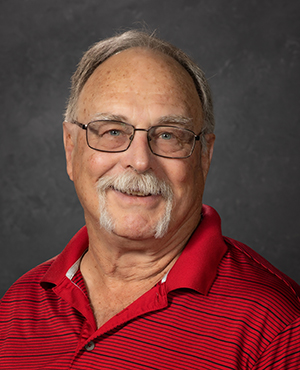
Christina Rush
The SMART FIRES Tribal Seed Award for the Life Sciences Department at Salish Kootenai College will be used to fund the establishment of a DNA isolation from Bison dung protocol with mentored undergraduate students in order to provide CSKT with a method to monitor Bison health in a non-invasive manner on the reservation.
Dr. Christina L. Rush has worked at Salish Kootenai College (SKC) in the Life Sciences Department as a faculty member since 2011 and as the Department Chair since 2017. In that time she has developed numerous research projects studying the microbes of the Berkeley Pit, the microbiota of Flathead Lake and, most recently started a project for the Flathead Bison Range. Mentoring undergraduate researchers is a key aspect of the job and has resulted in publications and many, many posters. Through the unique experience that SKC provides, for both faculty and students, Dr. Rush continues to learn and expand new research and instruction on the Reservation.
Engineering Innovators Camp: Cardboard & Chain Reactions
Support from this award makes the Engineering Innovators Camp: Cardboard Creations & Chain Reactions possible, bringing 3rd–8th graders together to solve problems, design as teams, and build creative cardboard inventions to share with their community.
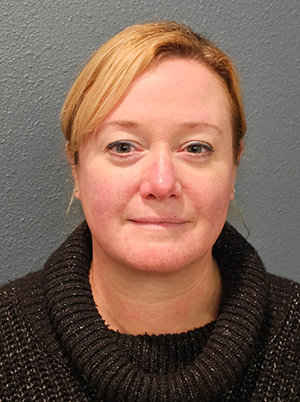
Heather Bleecker (co-PI)
Dr. Heather Bleecker, founder of Edutorium of Excellence LLC, is an experienced educator and consultant committed to culturally sustainable STEM learning and strong school and community partnerships. With a Doctorate in Curriculum and Instruction and over twenty years in mathematics education, she has focused her career on supporting pre-service teachers, coaching in-service teachers, and designing STEM programs that honor place and community. From 2018 to 2025, Dr. Bleecker served at Salish Kootenai College, where she led the secondary math and early childhood programs. Her work is guided by a commitment to hands-on, inquiry-based learning that expands access and builds student confidence. She has led multiple SKC STEM summer camps, and as Co-Investigator, she contributes curriculum design, mentor preparation, and evaluation to ensure meaningful and community-connected STEM experiences.
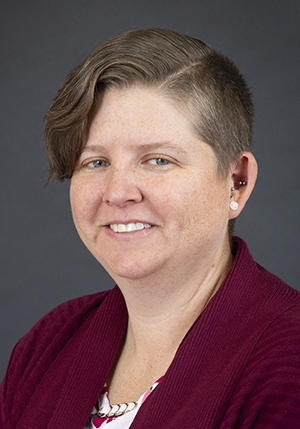
Polly Dupuis (co-PI)
Polly Dupuis is a mathematics educator at Polson High School and Salish Kootenai College, where she works to expand meaningful STEM opportunities for Indigenous students across the Flathead Reservation. She partners with community organizations, Montana State University engineers, and local teachers to create hands-on learning experiences that reflect students’ culture and community and strengthen their confidence in STEM. Polly has helped organize transportation-focused camps, technology camps, and STEM internships that give students real opportunities to explore engineering and problem-solving in engaging, supportive settings.
Montana State University Awards
Georgia Harrison
This project, which will also support an MS student, will evaluate how prescribed fire influences rangeland vegetation, productivity, and vulnerability to invasive annual grasses across Montana using satellite data, long-term vegetation records, and comparative modeling with environmentally similar unburned areas.
Dr. Georgia Harrison is an Assistant Professor of Rangeland Ecology at Montana State University in the Department of Animal and Range Sciences whose work centers on integrating field observations with remotely sensed data to improve rangeland management. Her research uses field data, remote sensing, and ecological modeling to understand vegetation change and support data-driven rangeland management across the western United States. She works closely with agency partners and producers to co-develop tools and analyses that inform on-the-ground decision-making. Dr. Harrison also teaches graduate and undergraduate courses in research design, rangeland ecology, and fire ecology and management. She is looking forward to joining the SMART FIRES group and engaging in meaningful research, mentorship, and collaboration.
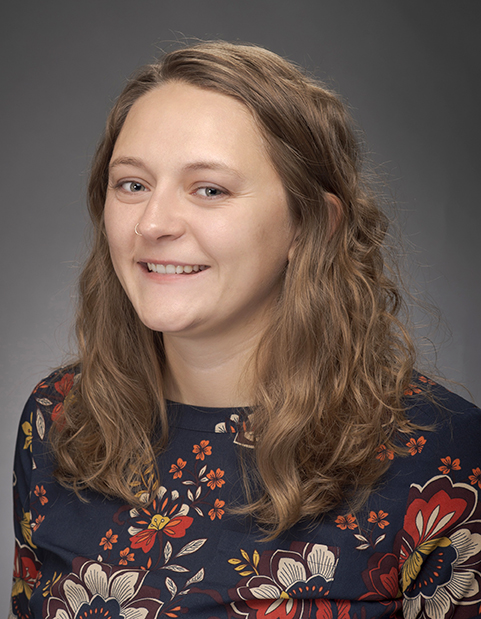
Sarah Morris
This award will support a graduate student studying fire plume dynamics during early ignition using background oriented schlieren--an optical technique used to visualize variations in fluid density, such as those caused by temperature gradients, pressure changes, or shock waves in gases and liquids.
Dr. Sarah Morris is an Assistant Professor in the Department of Mechanical & Industrial Engineering at Montana State University, where she runs the Experimental Fluid Dynamics Research Laboratory (EFRL). She received her PhD in Mechanical Engineering from Cornell University in 2020. Her research primarily focuses on vortex dynamics, with applications including aerodynamics, environmental flows, microgravity phenomena and bio-inspired flows. Her laboratory leverages numerous non-intrusive imaging techniques, such as flow visualization, particle image velocimetry, and background oriented schlieren. Her work is currently funded by NSF, NASA, and AFOSR. This SMART FIRES Seed Funding Grant will support research on laboratory experiments studying fire plume dynamics using background oriented schlieren.
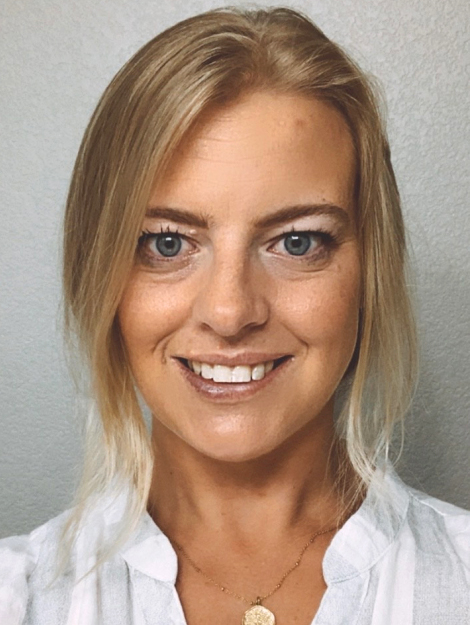
Mark Owkes
The proposed work will use simulations of aerial firefighting drops to study the origin of instabilities that lead to non-uniform coverage on the ground and reduce the effectiveness in wildfire management.
Dr. Mark Owkes is an Associate Professor of Mechanical and Industrial Engineering at Montana State University. He earned his Ph.D. in Mechanical Engineering from Cornell University and specializes in computational fluid dynamics. His research focuses on developing numerical methods to improve the robustness and accuracy of gas-liquid multiphase flow simulations, performing large-scale simulations of engineering-relevant flows, and creating novel techniques to extract useful physics from complex computational data.His work has been featured in Mountain Journal and MSU News for advancing aerial firefighting and wildfire suppression strategies. Dr. Owkes has received numerous honors, including MSU’s Faculty Award for Excellence and recognition as a finalist for the James and Mary Ross Award for Excellence. Committed to education and outreach, he mentors award-winning graduate students, advises the ASME student chapter, and engages in STEM programs for youth. He also serves on leadership boards for ILASS and contributes as a journal editor and reviewer.
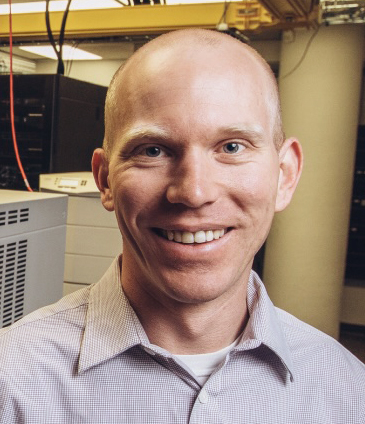
Travis Belote
This award will support a new PhD student’s project investigating whether short-term and stand-scale tradeoffs of fuels reduction treatments are offset by long-term and landscape-scale benefits.
Dr. Travis Belote started as an Assistant Professor of Landscape Ecology at Montana State University in August 2025 after 16 years with the NGO The Wilderness Society. His research explores basic questions about how nature works in service of addressing natural resource management and conservation challenges. He focuses on fire and disturbance ecology, connectivity science, and biodiversity prioritization using spatial analyses and field studies. He received his PhD at Virginia Tech and MS and BA at the University of Tennessee and conducted postdoctoral research with the US Geological Survey in Flagstaff, AZ.
University of Montana Awards
CognisFire-Lite: Smart Low-SWaP Sensor Nodes for Edge-Based Fire and Smoke Monitoring in Prescribed Burns
Lead Investigator: Anh Nguyen, Ph.D., Department of Computer Science
This project develops CognisFire-Lite, a lightweight CPS-IoT platform for real-time prescribed fire monitoring. It uses compact, low-SWaP sensor nodes integrating optical, thermal, and particulate sensors with embedded machine learning for on-node fire and smoke classification. These energy-efficient nodes form a distributed sensing network, enhancing situational awareness and enabling adaptive guidance for aerial and ground systems. Deliverables include sensor prototypes, embedded inference models, a pilot dataset from lab and field burns, and a draft proposal for full-scale funding, while supporting student involvement in AIoT and fire science.

Fire Modeling Avoided Losses from Fuel Treatments: A Counterfactual Analysis
Lead Investigator: Dr. C. Alina Cansler, Assistant Professor, Department of Forest Management
Co-Investigator/Student Investigator: Melissa Jaffe, PhD Student, Department of Forest Management
This awarded project focuses on evaluating the effectiveness of fuel treatments—such as prescribed burns and silvicultural thinning—in reducing wildfire severity and improving forest health. The team will use FlamMap modeling to compare fire behavior in recent Northern Rockies and Interior Northwest fires under two scenarios: with fuel treatments and without them, keeping all other conditions constant. By applying supervised machine learning to these counterfactual assessments, the project aims to quantify how treatments altered fire outcomes and provide a scalable workflow for land managers to plan future fuel treatments and inform policy decisions.