


The 2025 SMART FIRES Early Professional Career Development awards provide support for early-career faculty and postdoctoral scholars at Montana State University in disciplines related to SMART FIRES, such as computer science, engineering, environmental science, economics, chemistry, and social science. Eligible participants—including tenure-track assistant professors, non-tenure-track faculty, and postdoctoral scholars—received mini-grants to fund professional development activities such as conference travel, registration for courses and skills training, engagement with external mentors, and building professional networks.
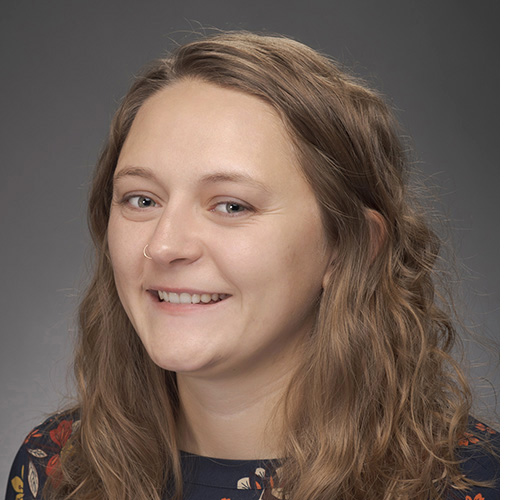
Dr. Georgia Harrison is an Assistant Professor of Rangeland Ecology at Montana State University in the Department of Animal and Range Sciences whose work centers on integrating field observations with remotely sensed data to improve rangeland management. Her research uses field data, remote sensing, and ecological modeling to understand vegetation change and support data-driven rangeland management across the western United States. She works closely with agency partners and producers to co-develop tools and analyses that inform on-the-ground decision-making. Dr. Harrison also teaches graduate and undergraduate courses in research design, rangeland ecology, and fire ecology and management. She is looking forward to joining the SMART FIRES group and engaging in meaningful research, mentorship, and collaboration.
Dr. Harrison will use the award to attend the International Fire Ecology and Management Congress from the Association of Fire Ecology in New Orleans in December 2025, participating in a workshop and engaging with conference sessions to advance her fire ecology research.

Dr. Rebecca L. Hoover is an Assistant Professor at Montana State University’s Mark and Robyn Jones College of Nursing and an emerging leader in rural adolescent and young adult (AYA) cancer survivorship research. Her work focuses on improving psychosocial care for rural, frontier, and Indigenous youth through participatory, community-engaged methods such as Photovoice involving both the survivors and the oncology nurses and navigators who care for them. She leads the FABRIC (Feeling and Behaviors of Rural Youth with Cancer) initiative, a multiyear effort to co-produce survivor-informed tools and frameworks that address inequities across the cancer continuum. Dr. Hoover collaborates with national and international partners, including the Teen Cancer America, Stupid Cancer, and Canteen, to advance binational research supporting underserved communities.
Dr. Hoover will use these funds to strengthen a binational research collaboration with the University of New South Wales Adolescent and Young Adult Cancer Programs, enhancing our shared capacity to understand—and ultimately improve—support for rural and frontier communities across the cancer continuum.
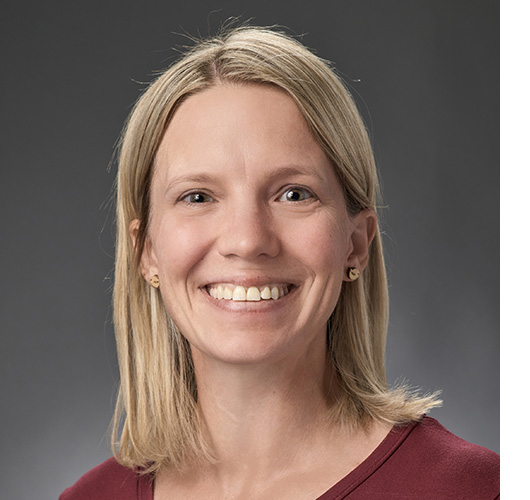
Dr. Dana Skorupa is a research faculty member in Chemical and Biological Engineering, where she has created a portfolio of professional development and research training programs for STEM students at Montana State University. As NSF-NRT Co-PI and Program Coordinator, she leads monthly graduate student workshops on topics such as project management, scientific integrity, responsible research conduct and career skills, fostering inclusion, collaboration, and transferable skills. Through her NSF-REU program, she has implemented an integrative training approach that prioritizes broadening participation, with a high proportion of participants from community colleges, tribal colleges, and non-research-intensive institutions. Skorupa is also experienced in creating course-based undergraduate research experiences (CUREs), including Yellowstone-based field and laboratory courses, where undergraduate students conduct active research, build teamwork skills, and gain hands-on experience in microbiology and bioengineering. Collectively, her efforts advance STEM education and professional development across multiple levels of learning.
Dr. Skorupa is using her SMART FIRES award to attend The Leadership Challenge Workshop and Implementation Lab to acquire the skills and tools necessary to implement leadership programs for MSU STEM students.

Dr. Fangtian Zhong has been an Assistant Professor at Montana State University since 2023. He earned his Ph.D. in Computer Science from The George Washington University in 2021. From 2021 to 2023, he worked as a postdoctoral scholar at The Pennsylvania State University and the University of Notre Dame. His research focuses on cybersecurity, software engineering, and machine learning. He received the Best Paper Award at IEEE Cyber Awareness and Research Symposium 2024 and the Best Poster Award at IEEE S&P 2025. Additionally, he has served as a TPC member and reviewer for several prestigious journals and conferences, including IEEE Transactions on Computers, IEEE Transactions on Information Forensics and Security, IEEE Transactions on Dependable and Secure Computing, IEEE INFOCOM, and Automated Software Engineering. He is also an Associate Editor for the IEEE Transactions on Network and Service Management and IEEE Transactions on Industrial Informatics.
Dr. Zhong will use the award to attend domestic conferences and to cover publication costs for journals.
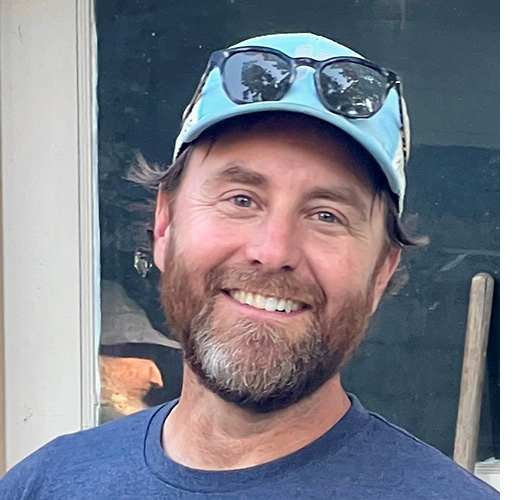
Dr. Travis Belote started as an Assistant Professor of Landscape Ecology at Montana State University in August 2025 after 16 years with the NGO The Wilderness Society. His research explores basic questions about how nature works in service of addressing natural resource management and conservation challenges. He focuses on fire and disturbance ecology, connectivity science, and biodiversity prioritization using spatial analyses and field studies. He received his PhD at Virginia Tech and MS and BA at the University of Tennessee and conducted postdoctoral research with the US Geological Survey in Flagstaff, AZ.
Dr. Belote will use the Early Career Award to attend and present to the International Association of Landscape Ecologists meeting in Athens, Georgia in April.
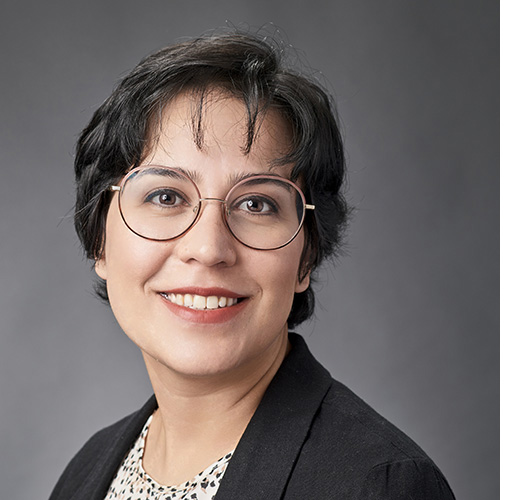
Dr. Neda Nazemi is an Assistant Professor in the Gianforte School of Computing. Her research integrates data mining, machine learning, and artificial intelligence to enhance decision making, resilience, and innovation across socio technical systems. She applies computational intelligence to challenges in environmental sustainability, health, education, and food systems, and develops interpretable and impactful artificial intelligence solutions that connect data centered modeling with practical societal needs. Her current projects include working with Civil Engineering on artificial intelligence based rockfall hazard assessment, with the Department of Education on understanding challenges in adoption of artificial intelligence by educators, with the University of Washington Department of Radiology and the Microsoft Research AI for Good Lab on developing an artificial intelligence assistant for radiologists, and with Food Science faculty on artificial intelligence guided innovation in sustainable food product development.
Dr. Nazemi will use this support to attend the NeurIPS 2025 conference in December 2025 to learn about the most recent advances in spatio-temporal modeling, multimodal data fusion, and decision aware artificial intelligence.
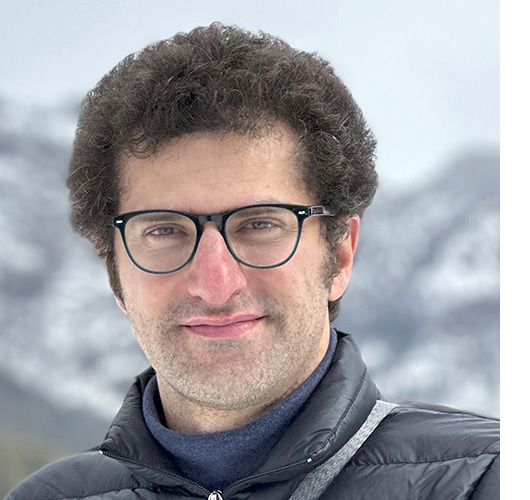
Dr. Faraz Dadgostari is an Assistant Professor in the Mechanical and Industrial Engineering Department at Montana State University, where he leads research in operations research, AI driven decision systems, and human AI alignment. His work integrates optimization, multi agent systems, and reinforcement learning with causal inference to develop decision analytic tools for complex socio technical and human AI systems. A central focus is multi agent inverse reinforcement learning, with applications to energy grids, healthcare delivery, and environmental risk management.
Dr. Dadgostari serves as PI and Co PI on projects funded by NSF, Microsoft Research, and the Montana Department of Transportation, including the NSF DigiCARES initiative on AI driven digital twins for climate aware energy resilience. His SMART FIRES research focuses on multi hazard risk analysis, remote sensing, and machine learning for wildfire resilience.
Dr. Dadgostari will use the award to attend the AGU Conference, complete FAA Part 107 drone certification, and participate in specialized drone-based sensor training to advance AI guided wildfire monitoring, risk analysis, and prescribed fire management research.